
×

Clay and Buck

For a better experience,
download and use our app!

C&B 24/7: Clay & Buck’s Show Prep

31 May 2022

Recent Stories

Get Password Hint

Enter your email to receive your password hint.

Need help? Contact customer service.

Forgot password

Enter your e-mail to receive your account information via e-mail.

Need help? Contact customer service.

Clay Reacts to Lia Thomas’ First Interview

31 May 2022

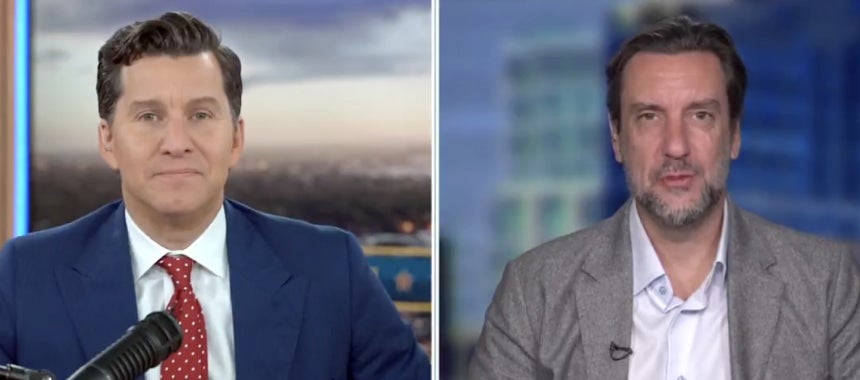
Will Thomas, who swam most of his career on the men’s team, spoke to ESPN/ABC News about his decision to declare himself a woman — Lia Thomas — and smash all the female records he challenges. Clay was invited on Fox’s America’s Newsroom to comment.

Recent Stories

C&B 24/7 VIP Video: Clay’s Opening Hour on Uvalde

27 May 2022

Watch Clay open the show reacting to the new unbelievable details of the complete failure of law enforcement to protect those school children in Uvalde, Texas.

Only C&B 24/7 members can watch this exclusive video.

If you’re not a member, sign up now. You can also use the special VIP email pipeline to Clay and Buck to share whatever is on your mind or take a deeper dive into the day’s top stories with Clay and Buck’s Show Prep.

Watch Here: It’s Infuriating! How Do You Not Go After the Suspect for an Hour? How Is It Possible?

Recent Stories

A Heartwarming Recognition for WWII Vet Nicholas Leo

27 May 2022

CLAY: We have a great Memorial Day story for you right here. So Nick Leo is about to hop on with us. His grandfather, Nicholas Leo, joined the U.S. Army at 19 as a member of the 23rd Headquarters Special Troops known as the Ghost Army. They landed in Normandy. By the way, I have been to Normandy. One of the greatest days of my life was getting to spend an entire day touring the beaches of Normandy. It still looks almost identical in many of those places as it did in 1944 when our Army stormed the beaches there.

While in France, Nicholas Leo met a young French woman need Pirette Mueller, fell in love. After the war, he went back to France to marry her with German POWs as witnesses. They were together 75 years before she passed away in 2020. He joined the Navy Reserve, served as a Navy radio operator during the Korean War aboard the destroyer USS Gatling. Where this comes into account here is, I have open DMs.

Sometimes that’s because people are telling me that I’m the worst human being on the planet. Other times it happens that people slide in and tell me interesting things. I can’t keep up with all of them, but I happened to be able to see Nick’s message to me. Nick, come in and tell people what you sent to me and what happened as a result.

LEO: Hey, Clay, how you doing? Thanks for having me on. So we had a ceremony for my grandfather in our local town and we had a couple representatives of local government from both New York Senators Schumer and Gillibrand, and he received all this recognition, and he also got letters from Pelosi and Biden. And my grandfather hates probably (laughing) every single one of those people and had Schumer is Gillibrand actually shown up he might have some words. But he was very respectful to everybody because it was such an honor.

CLAY: By the way, he’s 99 years old at the time that all this ceremony is going on, right?

LEO: Yeah, exactly. But, you know, he’s still as quick as you can imagine for a 99-year-old. Nothing gets past him. So Trump was his favorite president of all time. And I said to him after, I said, “This is too bad that you couldn’t have gotten this letter and all this recognition when Trump was in office,” and he goes, “That’s my only regret, I waited all these years.” This was declassified in 1996 that he was part of this; so it’s been a long time coming that he got this recognition.

So I said to him, he said, “I just wish this would have happened under Trump.” So I thought to myself, I said how can I get him something from Trump? So that’s when I went to Twitter and I sent a bunch of DMs out to the Trump kids, Kayleigh, Lauren Boebert, Marjorie Taylor Greene. And then I thought to myself, “Send it to Clay, send it to Clay,” of course. And you checked the DMs, and within five minutes, sure enough I got a response. I couldn’t believe it.

I was like, “Wow, that was quick.” So I said to you, I asked if possibly you could get maybe something over to the Trump people that we could possibly get him a letter saying something, similar to what we got from Biden. And within two weeks from you responding, I come home from work and find a letter addressed with the presidential seal and West Palm Beach address on it.

I’m like, “You gotta kidding me.” So, sure enough I open it and it is exactly what I thought it was gonna be, a letter for my grandfather congratulating him on this honor from Donald J. Trump. So you had made that happen, and it just blew my mind that it was like it went from just a DM to get this letter in the mail and then the next day I brought it over to him, and you should… I handed it to him, and he looked at it for a minute and then all of a sudden he looks up at me and hiss face gets all bright and he just goes, “Trump?”

And I said, “Yep, you got you a letter from Trump.” He says, “You gotta be kidding me,” and I said, “No, no.” He goes, “Of all the politicians I’ve written,” over the last how many years he had, he goes, “the only guy who’s ever responded was from Trump, and now I finally got a letter from him personally congratulating me,” and it made his day. When I tell you he talked for two hours straight, I haven’t seen him with this much energy in months.

And, you know, I just wanted me and my family Clay are just so thankful for you being able to take the time to do that and, you know, send the message along. You know, it’s something as simple as, you know, a letter but it means so much to somebody like him who waited so long for this recognition — and Trump was his favorite president, too; so it was —

CLAY: So 99 years old, he gets a letter from Donald Trump, his favorite president, and I… Look, all I did was I saw this story. I am eternally thankful to particularly World War II veterans, right?

LEO: Yep.

CLAY: If you have ever seen what they did. And so I happened to DMs, I saw this, I reached out to the Trump people, and to their credit, they responded almost, like you said, fairly instantly.

LEO: Yeah.

CLAY: Now this is a great story. I think this oftentimes doesn’t get told. Trump’s a good dude in general. And I know the media wants to destroy him and attack him and say he’s an awful person, but I knew as soon as I saw your 99-year-old grandfather, that he was a huge Trump supporter and that he would just — ’cause he had gotten a letter from Joe Biden and you sent it and said man, he wished this had happened when Trump was in office. I said, “I know if I get this to the Trump people, they will send him a letter.” And what…? Your grandfather, he died recently, right? So he just died, but this is one of the last great moments, I imagine, of his life was to get this recognition from the man he was a big fan of as commander-in-chief.

LEO: Yeah, absolutely. This was the last time I actually… He passed away a week ago, yesterday, actually, and it’s the last great memory I have with him in giving him this letter. And he just… He finally got — and I think that’s part of it. He was ready to go. He’d got the recognition he’d finally deserved. He waited 51 years before they declassified it, and then you add another how many years for this to go through to Congress.

And I mean, it’s one of those things that seemed like he got what he wanted and then he was able to just… You know, he was good. And, you know, he was just, like I said, the happiness on his face. If you look at the picture that I had sent you with him holding the letter you could see the smile on his face. It shows how happy and grateful he was of it all.

CLAY: No doubt, and look. It’s up, I believe, at Clay and Buck. There’s so many awful stories I feel like, as you well know, Nick, on a day-to-day basis that Americans hear about. I do think that oftentimes there’s really great stories like this that don’t get the light of day. So I just want to thank your grandfather, thank everyone out there who served and have given their lives.

Nick, I appreciate you reaching out to me. I was glad to be able to be a small part of helping him to be honored for his service. I’m glad that the Trump people were so responsive and were able to get him that letter and thank God for his service, and I hope you and your family are able to have a little bit more joy in mourning what was an incredible life that he had. Thanks, Nick.

LEO: Thanks, Clay. Thank you so much again. Me and our family appreciate it.

CLAY: Try to do a little bit of good out there as we roll into the Memorial Day weekend. Look, this is an incredible honor to get to talk to you guys every day because so many of you have served and fought for this nation. Whatever you’re doing with your family, take a moment to thank everyone who has given their lives to allow us to have the freedom that we do every single day. People like Nicholas Leo, 99 years old, who stormed the beaches of Normandy to preserve freedom for the world. Thanks to Donald Trump for helping to honor him.

Recent Stories

Governor Ron DeSantis Talks Baseball on Memorial Day Weekend

27 May 2022

CLAY: Prior to knowing about the shooting situation and the fallout from that, we had recorded an interview with Florida Governor Ron DeSantis. This was a couple days ago we did this. So thinking it was gonna be a Friday, relaxing Memorial Day, headed into the weekend, we did this interview. But I want you to know it’s not live and that’s why we’re not reacting to shooting related news and whatnot. But I do think you will enjoy this. This is Florida Governor Ron DeSantis. And I hope you enjoy it.

BEGIN INTERVIEW TRANSCRIPT

CLAY: I was talking earlier in the program today, Governor, about the fact that I’m going to be coaching and involved in Little League Baseball over the Memorial Day Weekend. Those are my big holiday plans. I don’t think your kids are quite old enough to be involved in Little League, but I always think this is pretty wild and I’m not sure a lot of our listeners know it. You played in the Little League World Series as a kid up in Williamsport, right?

GOV. DESANTIS: That’s right, and it was the type of thing where we at the beginning of the season in Dunedin, Florida. Our motto was WWT. We wrote that on the bottom of our hats, and that was for We Want Taiwan, because Taiwan at the time was the juggernaut and they would win the Little League World Series more often than not.

CLAY: I remember.

GOV. DESANTIS: It then came out years later that, you know, they were winning 12-year-old Little League World Series with 14-year-olds. But nevertheless, that’s just the way it was. And so that was kind of our goal. So we started from the district tournament, sectional state. the Southern Regional back then was Texas all the way to Virginia and the entire Southeast, 13 states, and there were only four American teams that would make it back then. And so that was a huge, huge undertaking, and we made it, and we didn’t end up playing Taiwan, but it was it was a heck of a ride. And just as now as a parent, my kids are five, four and two. So the two oldest have played T-ball.

CLAY: Okay.

GOV. DESANTIS: They both like it, and they’re going to they’re going to want to do it probably going forward. But you do appreciate how much the parents have to put in to these seasons. I mean, we were practicing every day. You’re traveling around the state for all these tournaments. It’s like, oh, all our parents had to work and do all that stuff, but you basically go along for the ride. And so you don’t really have summer vacation plans when you’re in the heart of Little League, summer baseball and the road to Williamsport.

CLAY: Preach it! I’m in the middle of that right now. Now, I’m curious, do you still have VHS tapes of that run? When was the last time you watched something from your Little League World Series team? You guys ever have any reunions or anything like that?

GOV. DESANTIS: So I went last year. They asked me to come for the Dunedin Little League closing ceremonies and that was the anniversary. So this is 2021. It was the anniversary of our Little League World Series run, and when they asked me to do it, I’m like, “Yeah, man, I can’t believe it’s been 20 years.” He’s like, “No, no, governor, it’s been 30 years.” I was like, “Oh man, time flies.” So we had some of my teammates were there and we were able to do that. And then we were able to speak to obviously all the current players and the families and whatnot.

So that was a neat thing. And that was the same field that I played on back when I was a kid. Back then we had Dunedin National, which is what I was. You also had Dunedin America, and they’ve since added those. That’s just one little league now. But it’s interesting. When I was 11, Dunedin National, we lost in three games, and we were out so very quick, all-stars, didn’t have really much of a chance.

But Dunedin American was one game away from Williamsport. They lost in the Southern Regional Championships. So that kind of gave us the notion of, “Hey, maybe we can do it when our when we’re 12,” and so we ended up doing that. But we had Dunedin America and one game away from going in to in 1990 and then Dunedin National, my team, made it in 1991. So pretty incredible for one relatively small municipality.

CLAY: I think, by the way, you also played at Yale, and if I’m not mistaken, George Bush senior, wasn’t he the Yale baseball captain as well? Am I wrong or is that an overlap there?

GOV. DESANTIS: He was the Yale baseball captain in 1948, and so he had already served in World War Two and then went to college after that.

CLAY: Oh wow.

GOV. DESANTIS: And back then, Yale would go to the College World Series. They were they were a good program. But the most iconic picture in the history of Yale athletics is Babe Ruth coming to Yale Field to get an award from the Yale baseball team, and George Bush 41 gave Ruth the award — and Ruth, he died within like a year.

So that was like one of his last public appearances, and so that’s something that’s kind of reverberated now. I was the baseball captain in 2001 there, and it just so happened to be Yale’s 300th anniversary. So they did this big jubilee in the spring to kind of celebrate that. And Bush 41 was kind of the featured speaker. So, he was in town for that, and he asked to come and meet with the baseball team, and so I was getting ready to go out to practice, and Yale Field is not on the Yale campus.

You kind of got to take a bus. It’s in West Haven, Connecticut, and so you go; they’d run busses from the athletic department out there. So I’m getting ready to go on the bus. No different from any other of the practice. The athletic director yells for me. “Hey, are you are you going to go out to practice?” “Yeah. “Get out there, hurry up, hurry up! Get out there!” But I’m like, it was weird. Why would you care about it?

So people are like asking me about practice, like it was this big deal. Why get out there to the field and there’s all these guys with suits and the earpieces in kind of like in the bullpen area. And I’m looking at myself. I’m like, “This is really weird.” So my coach called me over and he’s like, “Listen.” He’s like, “You see those guys out there with the suits, their Secret Service agents. George Bush, 41, is here. He’s like, you tell all those guys before he comes here, do not drop any F-bombs in front of the former president.”

CLAY: (laughing)

GOV. DESANTIS: So I was like, “Okay, I see.” But he came out and basically just started, um, you know, talking about, uh, you know, our season and everything like that. But I thought that that was really nice of him to be interested in coming out there. And this is a guy that obviously had done a lot in his life, and he was a really nice guy. And at that point, you know, I was somebody, you know…

I was a blue-collar kid from the Tampa Bay area. I end up there playing baseball, but I had never really met anyone that was that was that well known. And so it was kind of an interesting thing. But since I was the captain, I welcomed him to Yale Field, introduced him to the team, and we kind of had a powwow session there, all the way back in 2001.

CLAY: Are there pictures of that or video that? I don’t think I’ve seen it.

GOV. DESANTIS: You know, it’s interesting. There definitely are pictures somewhere. So it was the local paper in New Haven, the New Haven Register, was there and they were taking pictures, and so I remember after that happened, one of the guys at the athletic department is like, “You need you should get that picture, send it to him, he’ll sign it to you and give it back.” But, you know, I was I was graduating. I had all this stuff going on. So I just never did it. So they are out there somewhere. They may not be on the internet, but they’re definitely there, probably within the newspaper’s archives.

CLAY: There you go. APB. I bet we’ve got people who could track that down. We’ll see if we can find somebody out there to find that. Now, by the way, how would you assess your baseball…? If you were a scout, what would you have said about Ron DeSantis, college baseball player? How would you have assessed your game?

GOV. DESANTIS: I was a good Division One player. I think I hit .336 my senior year. I was a four-year starter. I always hit in the middle of the lineup third, fourth, fifth. I stole… I think my coach actually, I had him come when I was running for governor, and we did a rally, and I had a bunch of people just speak. People I knew from the military or Congress were like, “Hey, you know, Congressman DeSantis, great guy.

“Here’s what I know about him.” Well, he spoke about about coaching me and everything. And, and he had the crowd in the palm of his hand. These are like 500 activists down in Boca Raton. And he said, “Now, listen, people ask me, ‘Was he a good player?’ Here’s what I’d say. I calculated his career stats and I calculated Bush 41’s career stats. And Congressman DeSantis hit 100 points higher than George Bush 41,” and everyone started laughing about that.

So, yeah, it was fun, but it was interesting. The guy that succeeded me as captain of the Yale baseball team was a fellow named Craig Breslow, who’s a left-handed pitcher from Trumbull, Connecticut. And, you know, he got drafted, I think like the 15th, 20th round. He got released after a year or two. But then he got hooked up with an independent ball. He started throwing in the low nineties.

He ends up in AA with the Padres, and lo and behold — as a left-handed pitcher, throwing 92, you’re one call away from the big leagues. So he ends up in the big leagues a few years after he graduates from Yale. And he ended up playing 12 years. Fast-forward to me getting elected to Congress in 2012, and people know that I’m friends with him and they know that we played together.

So these reporters would ask me, they’re like, “Um, yeah. Your friend Craig Breslow playing baseball,” I think maybe for the Red Sox, and he’s like he’s like, “Why didn’t you play in the major leagues?” I was like, “If you think I was good enough to play in the major leagues and I would choose Congress over the big leagues, you’re nuts. I mean, of course, I wouldn’t be in Congress if I if I could do it!” So but it was interesting to be able to see that, and Eddie ended up having a really good career. And I think other than Ron Darling, he probably had the longest pro baseball career of anyone that that has played at Yale.

CLAY: The reason why I bring up baseball, obviously — and I appreciate you coming on with us here as we get ready for Memorial Day Weekend. Maybe you can share your Memorial Day Weekend plans with your family and whatnot as well. But you’ve got baseball cards that are out and you’re raising money, which I think is a really cool idea, based on autographing those baseball cards. And it’s a limited edition. Explain where the idea came from, what is on these cards, how people can get them.

GOV. DESANTIS: Well, Clay, we’ve sold so much merchandise. People love the merchandise. We have Fauci Pound Sand flip-flops. We have these T-shirts that have all the locked down libs that have visited Florida and all this stuff, and it’s fun, and we raise money and it helps spread the message. But you’re like, you know, maybe we should do some stuff that people would actually be able to keep as a memento. And so just growing up, I did the baseball cards.

And so what we decided to do is we have a normal baseball card. So it’s me in college, a picture of that, and that’s numbered 1 to 500, just typical card. Then we have numbered 1 to 25, an autograph version, and then we have numbered 1 to 10, an autograph with a relic. So they actually cut up my old pair of black boots and they put a piece of that in there, because that’s what they do nowadays. They could have a bat or a jersey or all that stuff. So we ended up doing that.

CLAY: Oh yeah.

GOV. DESANTIS: And so those are those are being sold and people are doing thousands of dollars for the relic autograph. So we so we have that. We’re also going to do so in my staff was like, “Governor we need to get those boots they need to do it to make the cards.” I’m rummaging through my closet, and I found a handful pairs of these old desert cami boots for when I served in Iraq. And so I’m thinking to myself, “Okay, well, maybe we do something with that.”

So we’re going to also debut in the not too distant future a Governor DeSantis Iraq War addition, where I’m in there in the desert fatigues and they’re going to do the relic and it’s going to be pieces of the desert cami boots that I that I wore when I was deployed back in 2007. So those will also be an autograph. I think those will be numbered 1 to 10. So, you know, these are people that they want to contribute.

They want to help the cause. And that’s great. And you know people can go to like my website RonDeSantis.com and just give and that’s fine and people do it. But for them to be able to get a little bit of a memento, I think people really like it, and these are limited. We’re not going to just produce a bunch of them because they lose their value. So any collector could know we’re very sensitive to making sure that these are limited edition.

CLAY: Did you have a favorite baseball card — last question for you — when you were a kid growing up, was there one you were most proud to have? Did you collect?

GOV. DESANTIS: Of course: 1989 Ken Griffey Jr.

CLAY: My favorite too.

GOV. DESANTIS: Would say. I mean, the first one that was a really big for me was the Don Mattingly, 1984 Donruss. I mean, that was like the hottest thing ever. I had to fight. I searched far and wide to get that. I did get it. It wasn’t in great condition, but I did get it. But then when the Griffey came out, I mean, that was just there. And so, you know, I still have some of those Griffeys.

CLAY: Me too.

GOV. DESANTIS: Some of them are in very good condition. I’ve got some PSA 10. And so we’re going to just keep those. I would never sell those. I don’t think I could ever sell them. It’s just it just is what it is. So yeah, that was that was kind of the that that the epic rookie card.

CLAY: Amen. Hey, have a good Memorial Day Weekend, you and your family. I appreciate you swinging by. I know how busy you are, and I hope you guys have a great time.

GOV. DESANTIS: Okay. God bless. Take care.

Recent Stories

Chilling 911 Call Details from the Uvalde Police Press Conference

27 May 2022

CLAY: This is maybe the most devastating part of a really devastating press conference that we began the show today with from Uvalde. It was Steven McCraw, who’s the Texas Department of Public Safety director. This is him speaking about 911 calls that were received from people inside of those classrooms while police were waiting outside to breach the doors. The failure to breach the doors has now been described as the wrong decision.

I’ll update you on all that to start the third hour if you haven’t already heard it. But this is chilling. They’re not playing the actual 911 call, but this a recitation of the calls that were received by police from those inside the classrooms where this killer was. How exactly that was going on, who exactly was calling, how that was occurring? These are all details we don’t know, but I just want you to hear this recitation which makes it all the more staggering that police didn’t go in immediately. Listen to this.

MCCRAW: The caller identified — I’ll not say her name, but she was in room 112 called 911 at 12:03 the length of the call was one minute 20 seconds she identified herself and whispered she’s in room 112. At 12:10 she called back in room 12, advised there are multiple dead. 12:13 again she called on the phone. Again at 12:16 she’s called back and said there were eight to nine students alive. At 12:19 the 911 call was made, and another person in room 111 called.

She hung up when another student told her to hang up. At 12:21 you can hear on the 911 call that three shots were fired. At 12:36, 911 call, it lasted for 21 seconds. The additional caller called back, student child called back, was told to stay on the line and be very quiet. She told 911 that he shot the door. At approximately 12:43 and 12:47 she asked 911 to “Please send the police now.”

CLAY: I just… For those of you out there listening, now, I would imagine that at some point these 911 calls are gonna get out, and I hope that everyone who made these 911 calls is still alive. But for those of you out there listening, these are the two rooms where the killer is sitting with his gun, room 112 and room 111 in these schools. They’re getting calls from both of them. One of those kids said, “Please send the police now.”

She said that at 12:47, guys. At that point in time that kid had already been in a locked room with this killer for an hour and 12 minutes. I want you to think about that for a minute. I want you to think about those kids and those teachers that were in there with a madman with a gun where he had been slaughtering these innocent kids, and at 12:47, an hour and 12 minutes into this, one of these little kids said, “Please send the police now.” Where the hell were the police?

At 12:16, one of these calls said there were eight to nine students who were still alive. Where were the police? They confronted this guy two minutes after he entered the school. And then they fell back and they let him lock the door, and they let him sit in there with those kids potentially killing more of them for 75 minutes. 12:03, 911 call. 12:10, 911 call. 12:13, 911 call. 12:16, 911 call. “There are still eight to nine students alive. We need you!”

12:19, other room — this is both rooms, room 112 and 111 — 12:21, you hear three shots fired. 911 call at 12:36 from a kid begging for help. 12:47, “Please send the police now.” What the hell were they doing? People say, “Oh, you can’t criticize. Why in the world are you saying this?” No. No. When people make bad decisions in positions of power, whoever the commanding officer was here, he failed.

He failed utterly, and there should be consequences when you fail utterly at the one job that matters the most, which is protecting the lives of kids. And, by the way, I guarantee you there were a ton of police officers there who wanted to go in. We know the Border Patrol guys who were a SWAT team that got there by 12:15. They didn’t let them go in for 35 minutes. You heard the officers calling in to this program and say, “If I can still move, I’m keeping going.

“I’d rather have that madman shooting at me than shooting at those kids.” The police were in the school two minutes after him. And then they allowed him to barricade himself in there with those kids despite all those 911 calls coming for 75 minutes? I’m sorry. Failure no matter your profession is unacceptable. We can’t allow something like this to ever happen again in terms of the response.

Now, the shooter is the most responsible. This awful, murderous… There’s so many words I want to use that I can’t say on radio about him. But we rely on our police and our responders to take these guys out, and they didn’t do it. They didn’t protect these kids like they could have. There are a lot of things that could be changed.

Recent Stories

What Memorial Day Means to Purple Heart Recipient Joey Jones

27 May 2022

CLAY: The show today began with the live press conference with more details being given about the shooting in Texas. We’re joined now by Joey Jones. You can see him a lot on Fox News. He is a military veteran. I know Memorial Day is particularly a moment of reflection in many ways for him. But, Joey, I want to start off with this. And, first of all, I appreciate you taking the time, man. When you hear the response…

We know that this guy is a murderous coward and that all of the condemnations should rain down upon him. But our response to that, the fact that the police took 75 minutes to decide to breach the door with a madman sitting there with a gun and young kids and potentially teachers still alive calling 911 begging for help, what’s your reaction to this?

JONES: Well, my first reaction is that it’s reminiscent of 2001. It’s reminiscent of pre-Homeland Security America where different agencies didn’t have the same protocols, didn’t have communication with one another. There wasn’t a concentric, on-site commander. These are things that we not only learned but canonized after 9/11 just so that fire and police could talk together, much less one police force talk to another.

There’s an ABC News report — I haven’t reposted it ’cause I got it about 24 hours ago, so very fresh. But in that report they talk about the school district upping its security budget from 200,000 to 450,000. They talk about some of the measures, and they outline two things in that ABC report that were allegedly done at that specific school. One was they didn’t have the same type of updated locking doors, because — allegedly — elementary schools are not seen as a higher value target than high schools.

And the other thing was they talked about why the gate wasn’t locked and why some of the doors were propped open and they alleged that it was because it was awards day and parents were coming and going. And so these are all things that we’ll learn specifically as fact as we get more information. But the idea behind this is simply, is this a small town that didn’t have the resources or wasn’t trained appropriately or is this one singular person making a really bad call, or is it a little bit of both? And I think that’s kind of the questions people have.

If you’re a parent there, you probably do want to assign blame, right? The person that’s truly responsible is dead. There’s no one to punish. There’s no recourse. So it’s human nature to look for someone to say, “You’re the person that I can be mad at,” and there will be a healthy amount of that. But when you take more steps back and it’s no longer a parent’s perspective but now an American’s perspective of what can we learn from this to do at this school, what can we learn from this to do nationally, I think that’s part of the conversation too. I mean, you know, right now there’s a lot of emotions, and those emotions should not go away. You had 19 children that had no reason to die and they did die.

CLAY: Joey, obviously we’re talking a lot and reacting a lot to this story. But your story. You are one of many veterans that are listening to this show right now. As we come into Memorial Day weekend, can you tell us about the injury that you had, your recovery and what Memorial Day means to you for all of our listeners out there?

JONES: Absolutely. I appreciate you asking. So quite simply, my story is not all that amazing or different. There are thousands of us out there, and that’s kind of what makes it special, that we have a fighting force of a little over a million, and among them are a lot of guys and gals who have suffered and sacrificed because they love this country so much. For me it’s quite simple. I was a EOD tech or a bomb tech in the Marine Corps. So my job was to help eliminate explosive hazards.

And those come in all shapes and forms, although most people think of one of what we call a roadside bomb or you read a few books, maybe an IED, a homemade bomb. And so that was the primary objective of my job circa 2010 in Afghanistan in the Hellmann region, which was essentially where the poppies grow, where we get a lot of the world’s opium, actually. So that’s what we were doing.

We were walking in a very agricultural area of Afghanistan attempting to get the people there to abandon the poppy harvest, adopt the wheat, harvesting and doing so financially cripple the Taliban and take away their ability to control an area as well. And so that was our job. We did it pretty well for about five and a half months. About five and a half months into it, we took a town called Safar Bazaar — and by “take,” I mean, we took control of a town called Safar Bazaar.

And we did that because the enemy, the Taliban, was strategically using it to stockpile components that they would then turn into IEDs. So kind of like cut the river off upstream. And in order for us to do that — because we try to eliminate civilian casualties — we let the entire town know we were coming. So the enemy took all those stockpiled IED components and turned them into IEDs and put them in the ground. So we really rolled into a minefield.

So for five days a handful of us, about six EOD techs, rendered safe about 50 IEDs, more than 30 of them was my teammate and I alone, and on the sixth morning we had an opportunity to take a step further, not just clearing IEDs out of the streets but starting to clear the buildings as well. There’s a method to how we take a town — and when we started there, long story short, we ended up in a spot we hadn’t been before, thought it was secure. It wasn’t.

And I stepped on an IED that I didn’t know was there. So what that means is that it took my legs off above the knee on both sides, landed me in a hospital in Landstuhl, Germany. Woke up two days later. This would be August 10th or August 8th, 2010. And I didn’t have legs anymore. Most importantly, I was asking about my teammate that was with me, or my buddy that was with me. And, unfortunately, he didn’t make it.

And so that’s kind of… That set the trajectory for the rest of my life. And so what you learn is that you have to go and live well for those that didn’t make it. I look to him to live my life to the fullest because he’s not here to honor him that way. And so that’s the message I try to send on Memorial Day, not just to veterans that come back that lost brothers and sisters overseas, but most importantly to the family that lost a loved one, is we can memorialize ourselves by living our lives well, by smiling a little bit more and dedicate those smiles to ’em.

And not just fill the sadness that stays with us but has its place and its place is not always fronted of mind. Sometimes we can smile and enjoy and that’s where it ties into what Americans do on Memorial Day which is barbecue, enjoy a day at the lake and celebrate that this country is so amazing that in today’s world, people volunteer to risk their lives to keep it that way.

CLAY: That is so well said. Look forward to seeing you sometime again man and thank you for your service and I hope you and your family have a phenomenal Memorial Day weekend.

JONES: Same to you. Keep up the good work. Enjoy listening to you.

CLAY: Hey, I appreciate that. It’s Joey Jones. He does fantastic work so many different places. Encourage you watch him on Fox News, where I see all the time. He’s doing incredible work there, and obviously he’s done incredible work for the country already, and I know there’s a lot of you out there who are veterans or serving right now that certainly connect with that story that he just told about his experience in Afghanistan and the loss of life of his buddy, his partner.

Recent Stories

Police Admit They Made the Wrong Decision, C&B Callers React

27 May 2022

CLAY: I want to play this cut again. In retrospect, they say it was now the wrong decision not to have breached the door sooner. This is the director of Texas Department of Public Safety Steven McCraw, and we will then take a couple more of your calls from people who have been involved in training for situations like these, trying to analyze what went so wrong in terms of the response in Texas. Here is that cut. Cut 17, a little bit earlier, listen.

MCCRAW: The decision was made on the scene. I wasn’t there. But the same point in time, you know, a decision was made that this was a barricaded-subject situation and was time to retrieve the keys and wait for a tactical team with the equipment to go ahead and breach the door and take on the subject at that point. That was the decision. That was the thought process that particular point in time.

With the benefit of hindsight where I’m sitting now, of course it was not the right decision. It was a wrong decision. Very… There’s no excuse for that. But again, I wasn’t there. I’m just telling you, from what we know, we believe there should have been an entry as soon as you can. Hey, when there’s an active shooter, the rules change. It’s no longer… Okay? It’s no longer a barricaded subject, you don’t have time, you don’t worry about a matter of perimeters.

CLAY: So that is an admission, again, they got it wrong. It was the wrong decision not to have gone in. There are reports out there, by the way, that the guys who did breach the door were ready 35 minutes fully before they were allowed to go in. And again the most chilling part about all this is the 911 calls that were received. Several of you want to weigh in. Luke in Charlotte, North Carolina. He is a retired cop. Luke, when you hear these details, what is your reaction?

CALLER: Well, my reaction is that every department after Columbine was trained: There is no wait for support. The first officer on the scene enters the building, engages the shooter, draws fire. And if you get wounded and you’re not dead, you keep firing. I’m sorry. You keep him firing at you. You keep engaging him. The door… The door thing really baffles me because every patrol car I was ever in had a shotgun with double-aught buck. I guarantee you there’s not a lock in any school can withstand point-blank two rounds of double-aught buck and stay intact. That door would be open in a couple seconds.

CLAY: So when you hear that the suspect entered the school — and I appreciate the call, Luke. You’re retired Charlotte, North Carolina, police officer. When you hear the suspect entered the school at 11:33 and there are three police officers entering by 11:35, two minutes behind him, and then they fall back and set up a perimeter, that just is stunning to you as a police officer? There’s reports they were wounded. It doesn’t appear they were wounded severely. In your training you go balls-to-the-wall, you don’t stop?

CALLER: I’m either gonna die or I’m gonna win. It’s better I die than those kids die. I’m sorry. That’s my… That’s the oath you take to protect and serve. That’s why you join the police department is to protect people. I would continue the pursuit. Once he locked the door, I’d grab my shotgun and I would take the lock off with a couple of rounds of double-aught buck, kick the door open — of course, I don’t have flash-bangs or anything like a SWAT team does — and enter the room.

And I might die entering the room, but the second guy behind me might get him. But that’s just the risk. That’s why we’re police officers. That’s why we joined the force, to help the community, and I just don’t understand the withdrawal and wait for support. The first officers on scene are in command of the scene. You don’t listen to the phone or the radio and, you know, the chief says do this or that. I just say, “Sorry, Chief, I can’t hear you. I’m going.”

You know? I’m just so fed up. And part of the problem is this. I think these small departments like this little town probably aren’t trained very well and they don’t have a lot of money for training. I was in a large county sheriff’s office. They had lots of money, and we got lots of training, and this is part of the problem. And we need more money for training these small city departments on how to respond to active shooters. It’s just as simple as that. I don’t understand, I just don’t understand. Okay, I got wounded? So what? Am I bleeding? So what? Can I move my arm? Yeah. I’m gonna continue shooting. I’m sorry.

CLAY: Luke, thanks for your call and everything you did in Charlotte. Bill in Kentucky, you’re a director for security for buildings, you’re calling in based on the facts that you’re hearing. What’s your reaction?

CALLER: Well, my reaction, first of all, since I retired I’ve been substitute teaching for my grandchildrens’ middle school and looking at this issue very carefully at their school every day and one thing the school obviously had some egregious failures. The out door should never be dropped open under any circumstance, and second each classroom has to be locked anytime the students are in those classrooms.

CLAY: Thank you. We’re going to break but those with two interesting points. The door was breached and propped open so somebody could come in, and those classrooms were not locked.

BREAK TRANSCRIPT

CLAY: We’ve got Steve in Spokane, Washington. By the way, appreciate our audience in Spokane, another one of those cities where the Clay and Buck show is number one in the city. Big hoops fans, obviously, in Spokane as well. Steve, you’ve got a chilling story that you wanted to share with us.

CALLER: Yeah, Clay. I know I’m supposed to talk as soon as you come on ’cause I listened from your sports show. But, anyway, I was in law enforcement for 12 years up in Washington and Idaho. And in 2017, my freshman daughter was involved — had a school shooting where she was at, very small school, 700 students, K through 12. No one would ever think it would happen. One student was killed and three were wounded. And one of the things that we learned in law enforcement coming out of Columbine was you always go in.

CLAY: Yeah. So when you hear that they allowed — and, by the way, I appreciate you calling in. When you hear that they allowed this gunman to sit inside of these classrooms armed with kids still alive in there for 75 minutes, and also that police were in that building within two minutes and then basically pulled off pursuit, as a former law enforcement officer who also has had a daughter involved in a school shooting, your reaction is what?

CALLER: I would have gone in. As a cop, I would have gone in no matter what they told me. And the only reason I couldn’t go in as a parent, the shooting up here was it was already over. But it’s just… You go in! It’s just automatic. You have to do it, and they’re taught that.

CLAY: Yeah. I appreciate your call.

BREAK TRANSCRIPT

CLAY: Jack in Adams County, Pennsylvania. You’re a police sergeant. When you hear those calls about the 911 calls, when you hear that they allowed this man to stay inside for 75 minutes when there were still kids and teachers alive in those classrooms, your thoughts are what?

CALLER: It just… It makes me want to vomit. We are trained every day — annually, biannually, tri-annually — how to take care of situations like this. And it’s unquestionable that if you’re the first on scene and there’s active shooting, an active shooter going on, that you make entry no matter what means… If you have to run a police cruiser through the front door, you make entry and neutralize that threat.

CLAY: So when you hear that police were inside two minutes — so this guy, according to the press conference, was insisted at 11:33. By 11:35, there were multiple police officers in the school pursuing him and then they just fall back and decide to set up a perimeter after exchanging gunfire with him? In your mind, that’s totally unacceptable police behavior?

CALLER: It is unacceptable police behavior. I would hope that I would never react like that. It’s a situation that I’ve not been in. But we train, like I said, tri-annually to take care of situations like this. And the ALERT training that I was involved in, it’s based out of Texas State University — it’s advanced law enforcement rapid response training — teaches this and we train with that ALERT training. It’s based —

CLAY: And the number one lesson there is engage tough shooters, go basically — sorry the phrase here — but balls-to-the-wall. If you’re a police officer and you’re responding and there’s an armed man in the school, you throw everything else out of the window and you go after that guy with the idea being maybe you can get him down, maybe he gets you down. But if he’s coming after the police, he’s not focused on kids or teachers?

CALLER: Correct. It’s… I like your term balls-to-the-wall.

CLAY: Yeah.

BUCK: It doesn’t matter if it’s a two-month rookie or a 23-year-old sergeant veteran that is first on the scene. They are trained to go in. That door, whatever means, go to the sounds of the gunfire and neutralize the threat. That’s the training.

CLAY: Thank you for your call, sir. We appreciate you letting us know. That’s why I want to hear — and thank you for listening as well. That’s Jack in Adams County, Pennsylvania, police sergeant. Hearing from you guys is far more valuable than hearing from me and that’s why this show is so powerful is there’s so many people with great understanding of these particular situations.

Including, I’m told, Cason in Raleigh, North Carolina, former Army Ranger and cop. You heard me play those 911 calls — chilling — in the degree that they were occurring inside of rooms 111 and 112. You also heard me say the police now saying it was a mistake not to go in. When you hear 75 minutes that they allowed this guy to stay inside of those rooms with the kids, your reaction is what?

CALLER: Oh yeah. It’s just terrible. My heart goes out to the family that lost kids and that lost their kids. I have three small kids and I wouldn’t know what I would do if any one of them are in this situation.

CLAY: Yeah.

CALLER: I mean, I would get up and drive to my kids’ school and go in there after the shooter. But it’s just… It’s terrible. We as law enforcement, and my background military, I do not like to fail. And, you know, we just have to call it like it is. This is just a failed… This is a mistake. Smart people learn from their own mistakes. Wise people learn from other people’s mistakes.

And I think people in situations unfortunately when this happens again, officers will respond more appropriately, learning from this mistake. It comes down to it’s just really it’s a sin problem in the world. We all think, “Hey, we know what’s best.” But if we just put Jesus first, follow what His teachings are, read the Bible and pray, we’re not gonna go wrong. We’re only gonna get better, gonna get stronger as a nation, gonna get stronger as a person, on our relationship with the Lord.

CLAY: I appreciate your work, I appreciate your call, and certainly there are a lot of people who appreciate what you just closed with.

Recent Stories

Former Navy Seal Jack Carr on Protecting America’s Schools

27 May 2022

CLAY: We are joined now by Jack Carr. And Jack has not been able to hear the press conference which just happened — and we played it in hour one and we’ve been reacting to it — but Jack is a former Navy SEAL sniper, New York Times best-selling author of In the Blood, and, Jack, I appreciate you joining us here, and I’m just gonna kind of give you a little bit of the background. I’ve been writing down the timeline. Obviously, you as a Navy SEAL, have been trained in a lot of very difficult hostage and active shooter-type situations over your time.

So what happened is, the suspect… I mean, “suspect” is probably being kind to him at this point. The killer enters the school at 11:33. Police enter within two minutes and exchange fire. This guy locks himself into a classroom. There are many kids inside of that classroom. By 11:35 he has locked himself into the classroom. There then are 911 calls that are received from kids inside of these rooms as well as teachers. And it is not until 12:50 that the door is finally breached and the suspect is killed.

That is 75 minutes that they allowed this guy with living kids and maybe teachers inside of that classroom to continue to have free rein over them there. This sounds like a complete failure by whoever was in charge there. And I know obviously you’re not an expert on this particular situation. But when you hear armed killer 75 minutes alone with kids that are still alive inside of that classroom, does that make any sense to you based on how you’ve been trained?

CARR: It’s not only training, it’s just a responsibility as citizens, as humans to run to the sound of the guns. And the first time police officers should be thinking about this is not when it happens. We have many years to go back and look at and take lessons from, from Columbine or you can go overseas and look at the Beslan school siege in September of 2004. That was Chechen terrorists three days in a school in Russia, over 300 people killed. So we see this time and time again.

We can juxtapose this with the situation in Nairobi, Kenya, a couple years ago where a suicide bomber walked into the courtyard of a hotel complex there in Nairobi, detonated, he was followed up by other terrorists with AKs from the Al-Shabaab terrorist organization who entered the hotel and started executing guests room by room. And there was an SAS, British special operator, in the area who heard the explosion, heard the gunfire, and what did he do?

He ran to the sound of the guns, he entered that hotel, and he started putting those terrorists down. I just had Meyli Chapin on my podcast recently. She was in one of those hotel rooms, and she was locked in her room for 17 hours. And she credits Christian Craighead, the SAS operator, with going in and saving her life and hundreds of other people. So juxtapose that with what we’ve seen in this country, and if the policy of these police departments is not to make entry into a school or a building, whatever it might be, well, then, it should add fuel to the argument that we need to harden these soft targets.

We could look at what happened in Columbine, we could look at what happened in Beslan, Russia, and think, “Oh, maybe our softest targets should be hardened.” We did it after September 11th with TSA and airports. And the fact that we have not done that to protect the softest targets out there and instead we put up signs that say “drug-free zone,” “gun-free zone” on these schools that are really an invitation to people that shows them that, “Oh, this place is a soft target and is not gonna be defended!”

It’s unconscionable that we do that and unforgivable. Regardless of what people think about the other parts of the issue but that we haven’t hardened that the same way we do our airports, our banks, our jewelry stores, the homes of our politicians, courthouses. We have ability to do that in this country. See what we just sent overseas and how much funding we just gave to a foreign nation overseas? Guess what? We can harden our softest targets here, and we can protect our children, and that should be a top priority.

CLAY: Can you imagine…? I mean, I’m sure there have been times when you disagreed with the decisions that were being made by your commanding officers, but there were reports that these expert SWAT team guys from Border Patrol arrived there by 12:15 and were begging to be allowed to go in, and they didn’t allow ’em to go in until 12:50.

Can you imagine how frustrating that would be for those guys to know that there are kids on the other sides of those locked doors, teachers on the other sides of those locked doors and they have 35 minutes that they have to sit there and cool your heels? Have you ever been in situation like that? Because I imagine there are a lot of people there who are members of the response team that were furious that they weren’t being allowed to go in, right, because the command structure and they’re making a decision that they disagree with.

CARR: I can only imagine how hard it will be for those guys to live with that each and every day for the rest of their lives thinking, “What could I have done? Should I have gone in?” And once again, the first time to be thinking about this is not when it happens. It’s well before, and as a leader, that’s your responsibility, is to be able to look at the situation on the ground and make a decision right there and enter. This is an in-extremis situation, and this is one of those ones where you have to go to in and do the job. You need to run to the sound of the guns.

There’s been a very short time in human history where people have relied on others to protect them, to dial 911. By its very nature, that means that people with guns are gonna be showing up late, they’re gonna be showing up after the fact. And at some point as citizens we need to take responsibility and realize that, hey, no one is coming. It is up to us. Be your own cavalry. Be your own first responder. It is our responsibility to protect our lives, those of our children.

In Israel, they have hardened their schools. And those are hard targets and not only are they hard targets from the outside looking in if they’re getting cased by a terrorist, by someone who wants to do harm to those inside, but also if someone does make entry, guess what? Most of those teachers are carrying concealed. They look at it as their responsibility to protect the students in their charge. And in this country, for whatever reason, we don’t believe that that is the case. And we get what we have here over the last couple days. It’s just heartbreaking.

CLAY: Yeah, Jack, I talk about an all-systems failure here. Obviously, the person who’s most responsible for this is the murderer. But our response to him is instructive, and I’ve used as an example, when a plane goes down we go find the black box and figure out what caused the plane to go down to try to avoid that ever happening again. The gunman went in an open door. The kids were not locked into their classrooms for whatever reason.

We still have more details to find out there. And then it took the police 75 minutes to breach the door to be able to get to the gunman, even though they were there within two minutes of the gunman entering school. So for people out there who say, “Well, the open door wouldn’t have mattered,” actually — you know this — even if he pulls out his gun and starts shooting at the door, first of all, maybe someone locks the classroom doors although why they weren’t locked already is a fantastic question that needs to be examined. But also it gives the police officers who were two minutes behind him more time to respond.

He might have cut himself up trying to get through that door. It might have taken him an additional 45 seconds or a minute. There might well be people alive today — they might be all alive except for the shooter — if that door had been locked. And so trying to figure out how this all-systems failure happens is a big part of trying to prevent, as you started, Jack, telling us what needs to happen to avoid it happening again.

CARR: That’s right. We have plenty of lessons we can look at. We neglect to do that in this country for whatever reason, we think in terms of four-year election cycles, eight-year election cycles, for the real deep thinkers among us, but we neglect to go back, look at the pages of history, take the lessons, and apply them going forward as wisdom. So what can we do based off this?

Well, we can do the same things that we should have done after the Beslan school siege in 2004, what we should have done after Columbine, what we should have done after all these school shootings. It doesn’t have to be a school shooting. It’s any sort of structure or a building. It is a soft target and therefore attractive to terrorists or people who want to do harm to those inside. We can harden these targets. There you are plenty of lessons learned, and we can make it happen in this country.

We can look at Israel. And so regardless of all the political infighting going on, back and forth, that’s gonna happen. Okay, fine. In the meantime, harden our targets and protect our children. And then as citizens we have to realize that the police are gonna show up late, they’re gonna show up afterward. So be your own cavalry. Be your own first responder. Get that training and be prepared to protect your life and people that you love. That is our responsibility as citizens. And it’s one of our primary responsibilities as citizens.

CLAY: Jack, we appreciate your service as we get ready for this Memorial Day weekend. You are former Navy SEAL sniper, New York Times best-selling author of In the Blood. Over Memorial Day Weekend, what sort of reflections do you have about the people you served with who aren’t here and the people who historically have given us the freedoms that we have today?

CARR: That’s right. For some of us, every day is Memorial Day in this country, and not just those of us who lost friends downrange but those who appreciate what was sacrificed from the inception of this country up through today so we can have these freedoms, options, and opportunities. My daughter and I recently went to Pearl Harbor this last December to the 80th anniversary commemoration event.

We took 63 veterans aged 96 to 104 back to Pearl Harbor, and my daughter who’s 16 got to sit across the table from these guys and listen to those stories now she has a touchpoint with that generation and an appreciation for all that was sacrificed so that she could have the freedoms that she has today. So I would encourage every family in this nation to find a local memorial to take their family there this weekend.

And to talk really about the people who risked everything and those who sacrificed everything and then what our responsibilities are as citizens today to preserve those for the next generation, because really the decisions that we make today are not about us. It’s about our children, our grandchildren, about those future generations. So appreciating what was sacrificed for us should be at the top of the list for every American.

CLAY: Jack, fantastic stuff. I appreciate you making the time for us on this Friday. And thank you for your service, and I hope you and your family have a good Memorial Day Weekend.

CARR: Thank you so much. Take care.

CLAY: That’s Jack Carr.

Recent Stories

It’s Infuriating! How Do You Not Go After the Suspect for an Hour? How Is It Possible?

27 May 2022

CLAY: I want to potentially go back to this press conference as we’re getting all sorts of questions. The spokesperson here, Stephen McCraw, breaking down… He’s the head of the Texas Department of Public Safety. He is… If you’re watching on television right now, which I know most of you are not, but he’s now standing in front of a diagram showing you how the suspect got into the building, where he went, what these classrooms looked like — classrooms number 111 and 112.

I think this is incredibly important information because this is really almost the equivalent of a plane crash. And you try to figure out how did this end up happening by reconstructing the events. He now has admitted, by the way, that it was the wrong decision to wait to breach the doors in retrospect. And again, this is what I believe is so difficult for many of you out there listening right now to comprehend: 11:33 a.m., Central time the suspect entered the school in Texas.

By 11:35, there were three police officers entering that school as well, two minutes behind him, and yet they did not breach the door and kill the suspect until 12:50. That’s an hour and 15 minutes that he was inside this locked classroom with these kids and these teachers. Also, chilling details: Many different 911 calls being made beginning, reportedly, at 12:03. And again, they itemized all these 911 calls, which I would imagine at some point will be released.

And I hope the people who made those 911 calls are all alive. He said some of them are — he didn’t say all of them, in response to a question. But 911 calls being made from inside of these classrooms — 12:03, 12:10, 12:13, 12:16, 12:19, 12:21, 12:36, 12:43, 12:47, 12:50, and 12:51. Some of those calls made by children, one of them saying, “Please send police now.” What were they doing? How could you be receiving these calls starting at 12:03, 911 calls from inside of these classrooms?

And it takes 47 minutes after the first 911 call for these guys to go in? How is that remotely possible? Forty-seven minutes! You know when you get that first 911 call — at least that’s been reported — at 12:03 that there are people who are alive in those rooms. The minute that you get a 911 call to notify you that there are people still alive, that there are children still alive in those rooms, how do you not breach the door and go after the suspect? The doors were locked, but they just said the janitor gave them the key.

If you are a police officer, how do you allow this to happen? Isn’t this the number one reason why you would want to become a police officer, to protect children from bad guys? Forty-seven minutes from 12:03, that 911 call, the first one that is reportedly arriving, inside of these classrooms with the madman, with a gun, and it takes you 47 minutes to breach the door and kill the suspect inside? I hope that he didn’t kill any more people during those 47 minutes. But can you imagine being a parent, knowing that your kids are behind those doors with a madman in there?

I mean, I’m gonna tell you the truth: There are a lot of dads and moms that would have tried to go in there on their own, who aren’t professional policemen, who aren’t professional SWAT team members. Guys, they were in the school two minutes after this guy was, and they allowed him to sit in that classroom with those kids from 11:35 until 12:50? I don’t blame any of those parents that were losing their mind outside. You’ve probably seen some of those viral videos.

Think about how you would feel if you thought your kids might be behind locked doors with the madman with a gun, the police had the key to the door, and they wouldn’t try to breach it. It’s been 72 hours since this shooting. And again, I want to make it clear, this killer is responsible. But how we respond to people seeking to do violence to us is an important part of what our entire public policy and society should be. And it feels like many of these details as they come out that we had an all-systems failure.

The door — again, I haven’t heard a more explanation, but a teacher propped up the door at 11:27 — would have otherwise been locked. Why did the door get propped open? Why was there not a lockdown order given inside the school when there’s somebody firing shots outside for multiple minutes? Why did the killer get inside of these classrooms and be able to lock it and they weren’t able to lock it from the inside before he got there? And now that we know that there was 911 calls, many of them…

I jotted down all the times, like 10 or 11 different 911 calls made from inside by both teachers and students. They also say that there were more shots fired going on inside of this classroom after he locked the door. What in the world is going on? Who’s making these decisions, and how did they make such bad decisions? (sigh) I’m gonna be honest. I mean, I was hoping it’s Friday, going into Memorial Day Weekend. I wanted to be talking about honoring all the soldiers and everybody else out there.

But the incompetence that we are now seeing was involved in this response to this shooter is so ultimately devastating for so many of you out there. And I bet for a lot of the officers that were on the scene. There are reports out there that these Border Patrol guys were begging to be able to go in and they weren’t allowed to go in. They said they arrived at 12:15, probably driving a hundred miles an hour to get there, and they weren’t allowed to go in ’til 12:50. It’s what they’re trained to do.

The police were inside two minutes after him. And they just allowed him to lock himself into the room with kids and stayed outside for an hour and 15 minutes? I’m telling you, when these 911 calls come out — and there are gonna be hard to listen to, ’cause you can imagine those little kids trying to call 911 and begging for the police to come in. Teachers begging too. Some of the voices on those 911 calls, those people may now be dead. What in the world were they doing, and who in the world was making the decisions on that day?

And how did they fail so badly?

BREAK TRANSCRIPT

CLAY: More and more of the details come out about the response. A teacher propped a door open. Why in the world did the teacher prop the door open? That is how this suspect was able to enter the school. Maybe the teacher was… They haven’t asked a lot of questions about that. That’s obviously a really important aspect, I would imagine, of this investigation. Maybe the teacher was trying to look outside to see whether or not there were shootings going on, the gun being fired.

But you just look back at all of these different cataclysmic decisions that all ran together that led to 19 kids and two teachers losing their lives, and you just think, “If you just have the door locked, if the police just go in full bore immediately when they know there’s a madman with a gun in the school, if the teachers had locked the doors inside of the school… Was there a lockdown ordered?” They’re now admitting it was the wrong decision to wait. But, I mean, I’m looking at my notes — and again this just happened this hour. We started off with this press conference to begin the show today.

At 12:16, they get a call; they’re told that eight or nine students are still alive inside. It’s a teacher, and she’s asking for help. When you get that call, how is your immediate response not, “We’re going now”? I just… I don’t understand. Whoever was making decisions on that day inside of that Texas school, he froze. That’s the only thing I can think of. You’re getting calls from inside of these classrooms and you’re being told that kids are still alive and there’s a madman with a gun in there and they’re begging you to come in and it takes you over a half hour after the call from the teacher?

I just don’t understand how that’s possible. I really do not understand how that’s possible. Here, I want to play a cut with you about the door breach. This is from the director of Texas Department of Public safety, Steven McCraw, on waiting to breach the door. He now says in hindsight that was the wrong decision. Ya think? Listen.

MCCRAW: The decision was made on the scene. I wasn’t there. But the same point in time, you know, a decision was made that this was a barricaded-subject situation and there was time to retrieve the keys and wait for a tactical team with the equipment to go ahead and breach the door and take on the subject at that point. That was the decision. That was the thought process that particular point in time.

With the benefit of hindsight where I’m sitting now, of course it was not the right decision. It was a wrong decision. Very… There’s no excuse for that. But again, I wasn’t there. I’m just telling you, from what we know, we believe there should have been an entry as soon as you can. Hey, when there’s an active shooter, the rules change. It’s no longer… Okay? It’s no longer a barricaded subject, you don’t have time, you don’t worry about a matter of perimeters.

CLAY: I just… I mean, how is it possible that someone could make the decision to leave those kids and those teachers inside of a locked room with an armed murderer for an hour and 15 minutes? I just… It is infuriating that someone could make that decision.

Recent Stories